
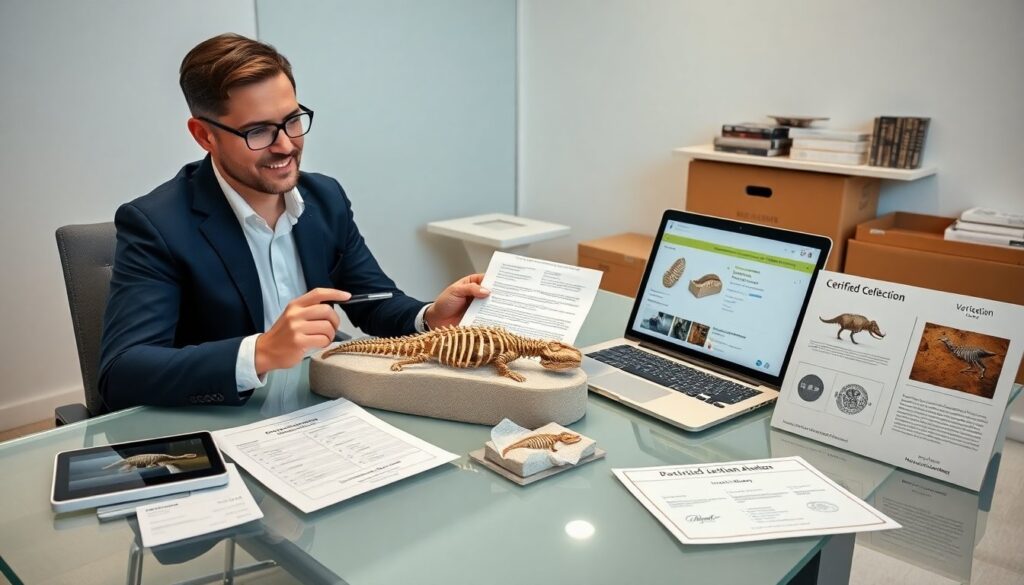
Fossil collections zebra buy win reviews bmdinoeivabbi appears in many search queries. The guide explains where to look, how to judge items, and how to protect purchases. It gives clear steps, checks, and examples. The reader gets practical rules to avoid fakes and to improve auction outcomes. The tone stays direct and factual to speed decision making.
Key Takeaways
- Searching for authentic zebra fossils and bmdinoeivabbi items requires checking verified dealers, museum sales, and listings with clear provenance and lab certifications.
- Evaluating fossil quality involves inspecting texture, checking for natural wear, reviewing thorough lab reports, and avoiding red flags like vague descriptions or suspiciously low prices.
- Successful buying strategies include setting clear goals, researching market prices, using proxy bids at auctions, and diversifying purchases to manage risk.
- Post-purchase care is crucial: fossils should be packed with protective materials, stored in stable environments, and preserved with proper documentation for future resale or appraisal.
- Keeping detailed records, contacting experts for authenticity verification, and posting honest reviews help build trust and support the fossil collecting community.
Where To Find Authentic Zebra Fossils And bmdinoeivabbi Listings
Collectors search for fossil collections zebra buy win reviews bmdinoeivabbi on several platforms. They check museum deaccession sales, specialist dealers, and verified auction houses. They scan fossil trade forums and dedicated marketplaces that show provenance and lab reports. They avoid anonymous listings without photos and documentation. They favor sellers who post clear locality data, acquisition history, and laboratory certificates.
Dealers post high-resolution images that show scale and texture. Buyers request scale bars and multiple angles. Buyers ask for field photos when possible. Auction houses list condition reports and return policies. Reputable sites mark items as legally sourced and include export permits when needed.
Collectors use search filters to limit results to certified sellers. They subscribe to alert services for zebra fossil types and bmdinoeivabbi keywords. They track lot histories and seller ratings. They cross-check seller names against industry watchlists and museum sale records. They contact sellers to confirm chain of custody. They refuse purchases that lack clear provenance.
Collectors use local fossil clubs and university contacts to vet listings. They send sample images to experts for quick checks. They consult recent sale catalogs to learn price ranges. They compare multiple listings before a bid. They set strict buying limits to avoid emotional overspend.
Collectors keep a checklist when viewing a listing. The checklist lists images, provenance, lab tests, legal paperwork, and return terms. The checklist helps keep decisions consistent and lowers the risk of buying forged or mislabelled zebra fossils and bmdinoeivabbi items.
How To Evaluate Fossil Quality, Authenticity, And Real Review Signals
A buyer tests a fossil visually first. The buyer inspects texture, color, and repair marks. The buyer looks for tool marks and inconsistent glue lines. The buyer checks grain and matrix contact. A real zebra fossil shows consistent mineralization and natural wear. A fake often shows modern adhesives and airbrush staining.
Buyers request lab reports when possible. A lab report lists mineral content, radiometric data, or CT scans. Buyers treat lab reports as strong evidence when the issuing lab has a known reputation. Buyers verify lab names and report numbers with the lab. Buyers avoid reports that lack contact details or that use vague language.
Buyers read reviews to find review signals. The buyer prioritizes long reviews with photos and purchase dates. The buyer flags short, generic reviews as weak signals. The buyer values reviews that mention shipping condition, packaging, and accuracy of description. The buyer checks multiple platforms to spot repeated complaints or praise.
Buyers use red flags to reject listings. Sellers who change descriptions repeatedly raise a red flag. Overly generic provenance claims without dates or locations raise a red flag. Prices that sit far below market rates raise a red flag. Sellers who refuse third-party inspection raise a red flag.
Buyers perform a simple authenticity test at home when allowed. They compare color and density against known reference samples. They consult a local university geology department for a quick check. They keep detailed photos and notes for future resale or appraisal.
Buying Strategies, Winning Auctions, And Post‑Purchase Care For Fossil Collections
A buyer sets clear goals before bidding. The buyer defines target species, acceptable condition, and maximum price. The buyer researches recent sale prices to set realistic limits. The buyer records these limits on paper or in an app. The buyer avoids emotional bidding that exceeds limits.
For auctions, the buyer enters proxy bids or uses automatic bidding tools when allowed. The buyer monitors lot order and shipping deadlines. The buyer inspects condition reports closely and asks questions before the auction ends. The buyer times bids near the end only when confident in the item and seller.
The buyer diversifies purchases across sellers and locations to reduce risk. The buyer splits budget between high-confidence buys and one speculative lot. The buyer documents every purchase with photos, invoices, and correspondence. The buyer stores paperwork in both digital and physical formats.
After purchase, the buyer packs and transports fossils carefully. The buyer uses acid-free tissue, foam padding, and sealed boxes for shipping. The buyer labels fragile items and buys insurance for high-value shipments. The buyer registers the item in a collection inventory with acquisition date, source, and photos.
For care, the buyer stores fossils in stable temperature and moderate humidity. The buyer avoids direct sunlight and rapid temperature swings. The buyer cleans fossils with soft brushes and avoids solvent cleaners unless advised by a conservator. The buyer consults a professional conservator for major stabilization or repair work.
The buyer plans for resales by preserving provenance files and condition reports. The buyer writes honest descriptions and includes original documentation. The buyer asks independent appraisers for valuation when needed. The buyer follows legal rules for export and sale to keep the collection market healthy.
Buyers who follow these rules reduce the chance of loss and increase long-term value. They keep clear records and choose trusted sellers to build a reliable fossil collection. They review purchases and post honest reviews to help the wider community find and trust zebra fossil and bmdinoeivabbi listings.