
A paleontology research waffle shop win feedback bmdinoaavca story sounds odd, but it began with a clear goal. The team wanted public input. They set a simple plan. They offered samples. They asked precise questions. They recorded answers. The method created fast feedback. The project gave the researchers usable data and the waffle shop new ideas.
Key Takeaways
- The paleontology research waffle shop successfully gathered honest public feedback by engaging customers in a busy, casual setting.
- Short, focused interactions with sampling and clear questions boosted survey completion and quality of feedback.
- Using a unique, simple tag like “paleontology research waffle shop win feedback bmdinoaavca” streamlined tracking and amplified social media impact.
- Clear goals and measurable targets defined success, linking customer responses to actionable outreach improvements and sales increases.
- Quick review and iteration of results during the event enhanced communication effectiveness and engagement.
- This collaborative, low-cost approach offers a practical model for researchers and small businesses to test ideas and generate reliable feedback.
The Unlikely Partnership: Why Paleontology Researchers Headed To A Waffle Shop
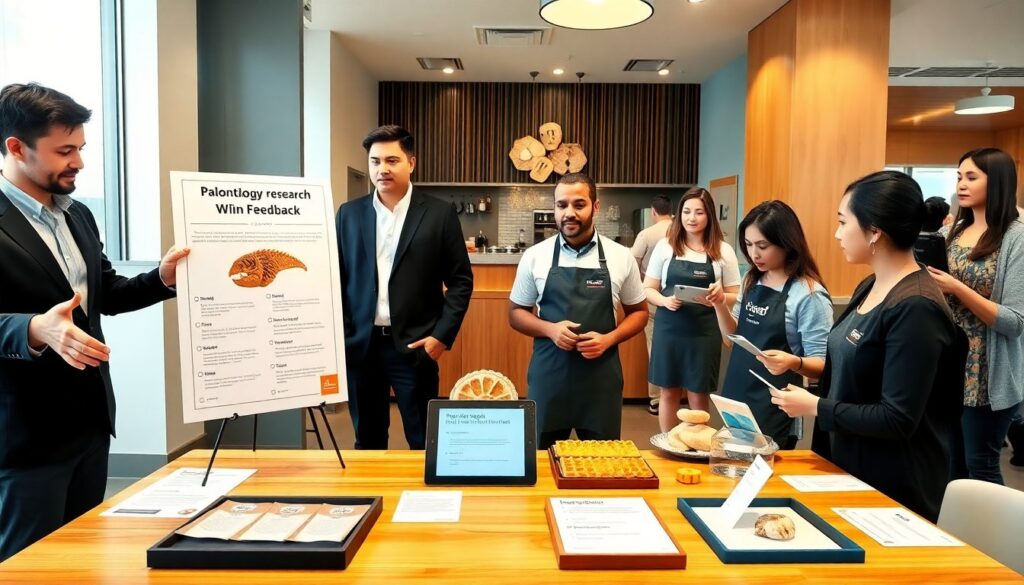
A paleontology research waffle shop win feedback bmdinoaavca result came from one practical motive: the researchers needed honest public reaction. They sought everyday opinions on outreach materials and exhibit ideas. They chose a busy waffle shop to reach casual visitors. The team arrived during a weekend rush. They set a small table near the counter. They displayed fossil casts, a poster, and tasting coupons. The waffle shop owner agreed because the event could boost sales. The staff helped by handing out flyers and pointing customers to the table. The arrangement let the researchers engage people who would not attend a museum talk. The setup also let the waffle shop test limited-time menu changes. Both sides gained clear, fast feedback. The phrase paleontology research waffle shop win feedback bmdinoaavca stayed visible on posters as a project label and conversation starter.
How The Event Worked: Presentation, Sampling, And Real-Time Feedback
The team designed a short flow. They gave a two-minute presentation. They showed a replica fossil and two simple images. They explained one research question in plain language. They offered a small waffle sample tied to a theme. They asked three focused questions on a single sheet. They used checkboxes and one short write-in line. They timed each interaction to five minutes. They logged answers on tablets. They recorded basic demographics with consent. Volunteers guided people to the survey and handed out coupons. The waffle shop served as a natural test lab. Customers tasted the waffle, read the poster, and then answered the questions. The team collected dozens of responses each hour. The use of the label paleontology research waffle shop win feedback bmdinoaavca on materials helped staff track responses linked to the event. The data arrived as clean counts and short comments. The team reviewed results live and adjusted their script between shifts. This quick iteration kept conversations fresh and improved completion rates.
The Moment Of Victory: What ‘Winning’ Looked Like And How Feedback Was Measured
They defined winning with clear metrics. They set targets for response rate, quality of comments, and social shares. They aimed for a 30 percent survey completion rate among approached customers. They tracked positive sentiment and actionable suggestions. They monitored social posts that used the project label paleontology research waffle shop win feedback bmdinoaavca. They treated shares as amplification. The team considered a day a win when response rate and comment quality met targets and the waffle shop saw a measurable sales bump. They used simple scoring to convert comments into action items. They counted mentions of exhibit ideas, language clarity, and interactive elements. They listed the top five actionable items after each day. They used those items to revise outreach materials. They repeated the test over three weekends. The repeat test confirmed that changes improved comprehension and interest. The project label paleontology research waffle shop win feedback bmdinoaavca appeared in the team notes and in the waffle shop’s social feed as an easy tag to track impact.
Decoding BMDINOAAVCA: A Possible Acronym, Data Tag, Or Campaign Code
The label BMDINOAAVCA served several roles. It acted as a compact tag for tracking and sorting responses. It worked like an acronym that the team and the shop staff could use. It matched the event name and the survey code. It helped group digital mentions on social platforms. It let the team pull related posts and comments quickly. It also functioned as a short campaign code on printed coupons. The code simplified data entry and reduced errors. The team later tested variations of the code to see which version customers used in posts. They found that a unique, odd string encouraged people to copy it exactly. That habit made tracking easier. The presence of paleontology research waffle shop win feedback bmdinoaavca in posts and notes gave the team a single key to pull event metrics. They used the key to match sales spikes to outreach days. They also used the key to filter survey results for qualitative analysis.
Five Practical Lessons For Researchers And Small Businesses From This Experiment
Lesson 1: Pick a busy public spot. The team chose the waffle shop and reached diverse customers. Lesson 2: Keep interactions short. The five-minute approach raised completion rates. Lesson 3: Use a simple tag like paleontology research waffle shop win feedback bmdinoaavca. The tag made tracking easier. Lesson 4: Offer a tangible incentive. A small free sample and a coupon increased participation. Lesson 5: Review results quickly and act. The team changed materials between shifts and improved outcomes. These lessons apply broadly. They help researchers test outreach ideas. They help small businesses test menu changes. They reduce risk and speed learning. The project used low cost methods and clear measures. The methods gave reliable feedback that both sides could use.